Reproductive Equity
Even in places where abortion, contraception and reproductive care are available, those services remain out of reach for those who are disadvantaged by systemic racism, economic insecurity and immigration status. Other barriers persist, too: lack of education or transportation, unjust work environments, intimate partner violence and the undue influence of patriarchal systems. While in theory the right to choose should be protected, the ability to choose it too often a privilege enjoyed by white and wealthy people.
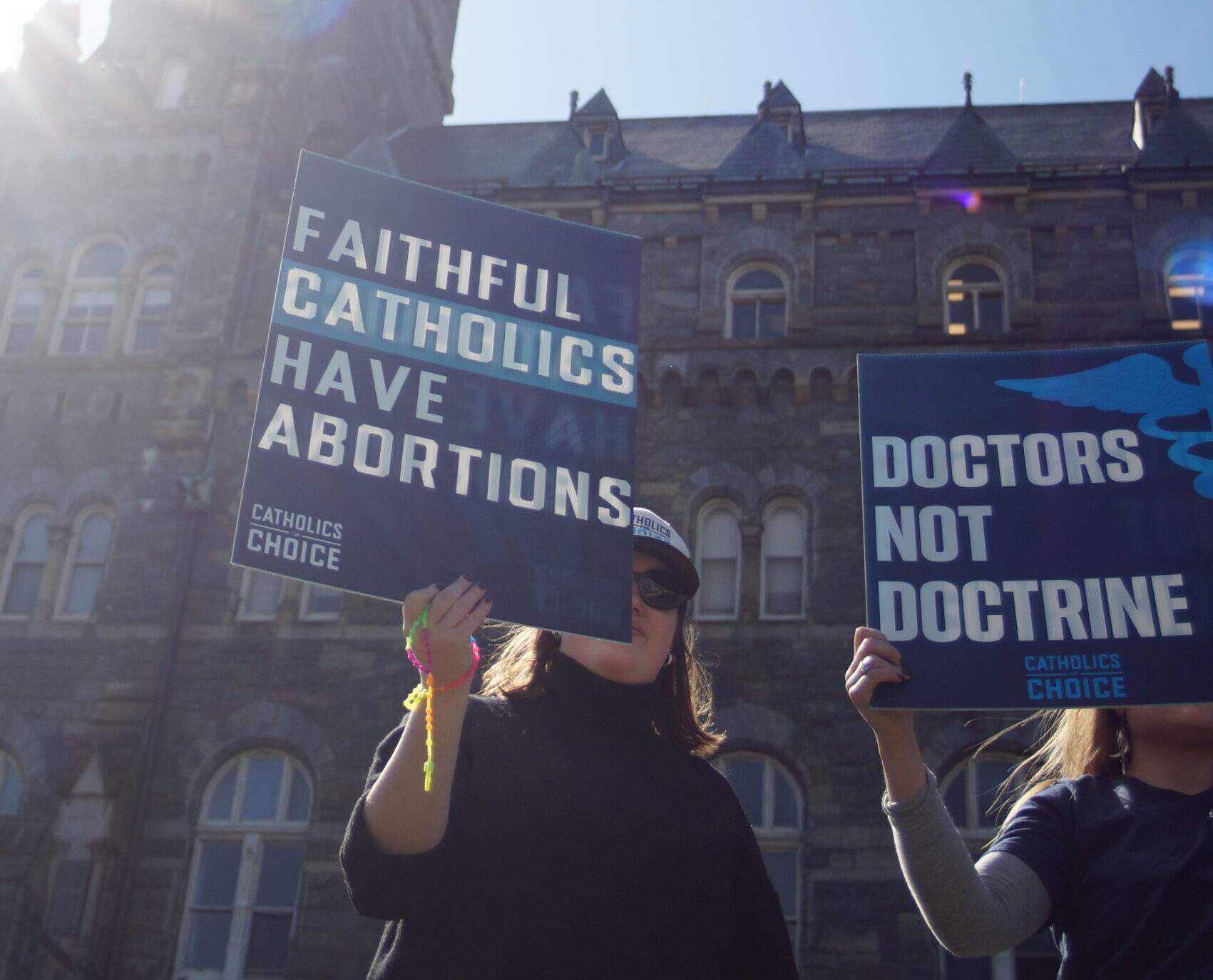
As Catholics for Choice, we believe that every person should have equal access to the full scope of health care services, unencumbered any barriers. With our partners in this struggle, we seek to build equitable systems in which all women–particularly Black women, women of color, indigenous women, transgender women and non-binary people–have access to reproductive health education and care. Having access to a full range of reproductive health services allows women access leadership and to greater political and economic power.
Questions about Reproductive Equity
We've compiled these talking points to help inform Catholic conversations about reproductive equity.
The struggle for reproductive rights has been going on for decades and centers around achieving the right to choose for all women and those who can get pregnant.
Reproductive justice moves beyond the binary prochoice vs. prolife debate and has three core beliefs: the right not to have a child; the right to have a child; and the right to nurture children in safe and healthy environments.
The framework of reproductive justice was developed in 1994 by 12 Black women in response to the Clinton administration’s proposed plan for universal health care. The women questioned the assumptions that were being made by those who developed the health care plan and whether they were really able to represent the needs of Black women.
When a person gets pregnant, whether planned or unplanned, the discussion is never limited to whether or not the pregnant person can get an abortion. All kinds of social justice issues come to the fore: workers’ rights, protection from domestic violence and abuse, immigration status, a clean and safe environment, and access to adequate education, health care and childcare. So they developed an ethical framework that they called reproductive justice that interweaves reproductive rights with social justice.
Sinful structures of gender inequality, systemic racism, economic insecurity and immigration status can limit one’s ability to make choices. The ability to chooses is too often a luxury enjoyed by those who are wealthy, white and privileged. As Catholics committed to a rich tradition of social justice teachings, we must dismantle the injustices that prevent people from being able to make choices for themselves.
Insights & Resources
Pack of Prayer Cards — English
Download this two-pack of pro-choice prayer cards: One for St. Brigid, the patron saint of fertility and children,…
Just the Facts: Catholic Perspectives on Sex, Gender, and Reproductive Health
Just the Facts: Catholic Perspectives on Sex, Gender, and Reproductive Health provides the latest data about American Catholics’…
¡Conócenos!
Somos una organización que representa y enaltece las voces de la mayoría de las personas católicas que creen…
Mary had a choice. You should, too.
Mary, Mother of God, chose to become pregnant with Jesus. How do we know? It’s in the Gospel!…
Catholics for Choice and IVF
On February 20, 2025, the U.S. Conference of Catholic Bishops released a statement claiming that IVF “destroys human…
Why Decriminalization of Abortion in Brazil is Necessary
Across the world, hard-won reproductive rights have been rolled back over the last few years. June 12, 2024,…
Get to Know Us!
Catholics for Choice is a nonprofit organization that encounters, educates, and emboldens people of faith who support reproductive…
Prayer Cards: St. Hildegard and St. Brigid
What did the saints think about abortion? At least two taught about and practiced abortion care! St. Brigid…
Sign up with just your email
Sign up with just your email
Support the work of faithful advocacy
Help us challenge and dismantle religiously-based barriers to safe, legal, and comprehensive reproductive healthcare.
Donate